
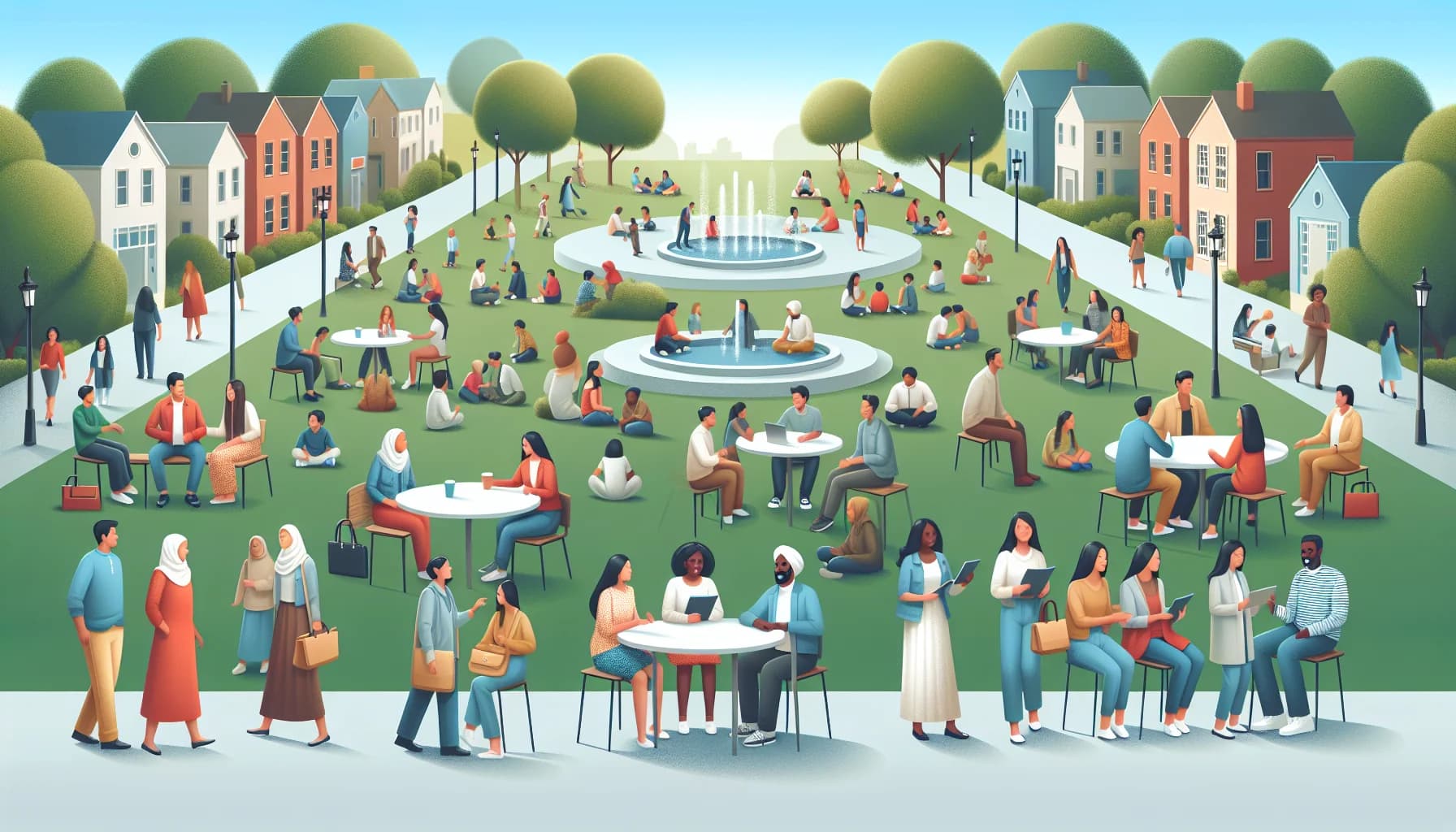
Introduction to Community and Society
The concepts of community and society are fundamental to understanding human relationships and interactions. They serve as the backbone of human civilization, shaping our identities, cultures, and social structures. In this article, we will delve into the definitions of community and society, their significance, and explore the intricate relationships between them, as well as the challenges and opportunities they face in today's world.
Definition of Community
A community can be defined as a group of individuals who share a common geographical area, interests, values, or social ties. It is characterized by a sense of belonging and interconnectedness among its members. Communities can be large, such as cities or regions, or small, like neighborhoods or specific interest groups. The essence of a community lies in the relationships and networks that individuals form with one another, fostering a sense of identity and mutual support.
Definition of Society
Society, on the other hand, refers to a broader system that encompasses multiple communities and encompasses the complex relationships among individuals, institutions, and cultural norms. It is the larger framework within which communities exist, consisting of various structures, such as political, economic, and legal systems. Society provides the rules and norms that govern behavior, facilitating social order and cohesion.
Importance of Studying Community and Society
Understanding community and society is essential for several reasons:
- Social Cohesion:Studying these concepts helps to identify factors that promote or hinder social cohesion and integration.
- Public Policy:Insights gained from community studies can inform public policy and community development initiatives.
- Cultural Understanding:By exploring diverse communities, we can foster greater cultural understanding and empathy among different groups.
- Social Change:Analyzing community dynamics can shed light on social change processes and the impact of globalization.
The Role of Community in Society
Types of Communities
Communities can be categorized into various types based on their characteristics and the nature of their bonds:
- Geographic Communities:These are defined by physical boundaries, such as towns, cities, and neighborhoods.
- Interest-based Communities:Formed around shared interests, hobbies, or professional affiliations, these communities exist online and offline.
- Cultural Communities:Groups that share a common culture, language, or heritage, often preserving traditions and customs.
- Virtual Communities:These exist primarily online, where individuals connect through social media, forums, and other digital platforms.
Functions of Community
Communities serve several critical functions within society:
- Support Systems:They provide emotional and practical support to their members, helping individuals cope with challenges.
- Resource Sharing:Communities facilitate the sharing of resources, information, and services, enhancing the collective well-being.
- Socialization:They play a vital role in socializing individuals, transmitting cultural norms, values, and behaviors.
- Empowerment:Communities empower individuals by providing platforms for collective action and advocacy.
Community and Social Identity
Community is integral to the formation of social identity. Individuals often derive a sense of self from their affiliations with various communities, influencing their beliefs, behaviors, and worldviews. Social identity encompasses aspects such as ethnicity, religion, and profession, and these elements are often intertwined with community membership. This connection fosters a sense of belonging and pride, while also influencing social dynamics and interactions within society.
Social Structures within Communities
Family and Kinship
Family is often regarded as the foundational unit of community. Kinship ties shape social relationships, responsibilities, and cultural practices. The structure of families can vary widely across different cultures, affecting community dynamics:
- Nuclear Families:Comprising parents and their children, these families are common in many Western societies.
- Extended Families:In many cultures, extended families include multiple generations living together or in close proximity, reinforcing community bonds.
These familial structures influence social networks and support systems within communities, highlighting the importance of family ties in shaping social cohesion.
Education and Learning
Education serves as a critical social structure within communities, facilitating knowledge transfer and skill development. Communities often establish schools, libraries, and educational programs to foster learning. The role of education in community building includes:
- Social Mobility:Education provides opportunities for individuals to improve their socio-economic status and contribute to community development.
- Civic Engagement:Educated individuals are often more engaged in civic activities, promoting democratic participation and social responsibility.
- Cultural Transmission:Educational institutions play a role in transmitting cultural values and norms, enhancing social cohesion.
Economic Systems
The economic structure of a community significantly impacts its overall well-being and development. Communities may operate under various economic systems, such as:
- Traditional Economies:Based on subsistence farming or local craftsmanship, these economies rely on communal resources.
- Market Economies:In urban settings, market economies dominate, driving job creation and economic growth.
- Cooperative Economies:Some communities emphasize cooperative enterprises, encouraging participation and equitable resource distribution.
Understanding the economic systems within communities allows for better strategies to address issues such as poverty and unemployment.
Challenges Facing Communities Today
Urbanization and Migration
The rapid pace of urbanization poses significant challenges to communities worldwide. As people migrate to urban areas in search of better opportunities, communities often face issues such as:
- Overcrowding:Increased population density can strain resources and infrastructure.
- Social Fragmentation:The influx of diverse populations may lead to tensions and fragmentation within existing communities.
Addressing these challenges requires innovative solutions and inclusive policies that promote integration and support for both existing residents and newcomers.
Social Inequality
Social inequality is a pervasive issue affecting many communities, manifesting in disparities in income, education, and access to resources. Factors contributing to social inequality include:
- Systemic Discrimination:Marginalized groups often face barriers that limit their opportunities for economic and social advancement.
- Geographical Disparities:Communities in rural or economically disadvantaged areas may lack access to quality education and healthcare.
Addressing social inequality requires concerted efforts from both local communities and governmental institutions to implement equitable policies and programs.
Environmental Issues
Communities are increasingly confronted with environmental challenges, such as climate change, pollution, and resource depletion. These issues threaten the sustainability of communities and their quality of life. Strategies to address environmental concerns include:
- Community-based Conservation:Engaging local residents in conservation efforts can help protect natural resources.
- Education and Awareness:Promoting environmental education fosters a sense of responsibility and encourages sustainable practices.
By addressing environmental issues, communities can work towards creating healthier and more sustainable living environments.
Building Stronger Communities
Community Engagement and Participation
Active community engagement is crucial for building stronger communities. Encouraging participation in local decision-making processes empowers residents and fosters a sense of ownership. Strategies to enhance community engagement include:
- Community Meetings:Regular meetings provide platforms for discussion and collaboration on local issues.
- Volunteer Programs:Encouraging volunteerism helps build social networks and fosters a sense of community pride.
Role of Technology in Community Building
Technology plays an increasingly vital role in fostering community connections. Social media platforms, online forums, and community apps facilitate communication and collaboration among residents. The benefits of technology in community building include:
- Enhanced Communication:Technology allows for real-time information sharing and discussions.
- Increased Accessibility:Online platforms can engage individuals who may not be able to participate in traditional community activities due to mobility issues or time constraints.
Strategies for Sustainable Development
To build stronger, more resilient communities, sustainable development strategies must be implemented. These strategies should focus on:
- Economic Diversification:Encouraging a variety of industries can reduce dependence on a single economic sector.
- Environmental Sustainability:Implementing practices that protect the environment ensures the long-term health of communities.
- Social Equity:Promoting inclusion and equity within community development initiatives ensures all voices are heard and valued.
By prioritizing sustainable development, communities can work towards a future that is equitable, resilient, and thriving.